
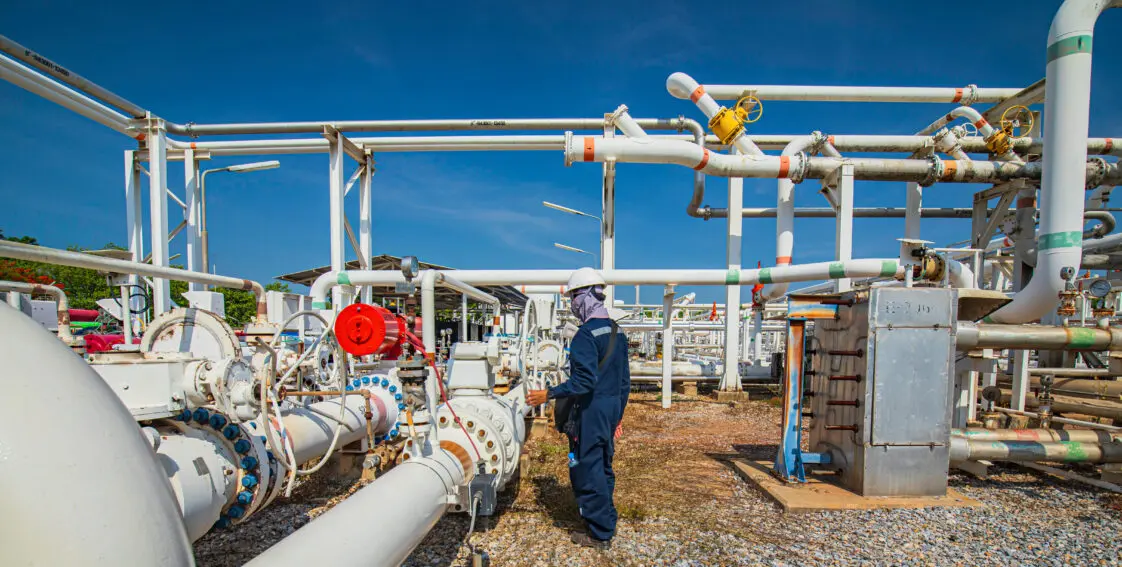
Our Recommended Explosion-Proof Industrial Heaters
Class 1 substances are everywhere in the oil and gas industry, from upstream exploration and production to downstream refining and processing. These Class 1 substances, if exposed to heat, could explode and cause severe injuries or death.
Unfortunately, industrial heaters are essential in many oil and gas applications because they prevent liquids from freezing, help maintain viscosity and pressure to ensure consistent flow and reduce waste, and support operations like distillation and cracking.
To ensure safety, only explosion-proof industrial heaters should be used in these Class 1 environments.
What Makes a Heater “Explosion-Proof?”
Hazardous Area Classification
In the U.S., hazardous areas are defined by the NFPA 70 (NEC) code, which establishes three Classes of hazardous areas:
- Class 1: Flammable gases and vapors (including liquids like petroleum)
- Class 2: Combustible dust
- Class 3: Ignitable fibers
Within the oil and gas industry, Class 1 is the type of hazardous area most often encountered.
NFPA 70 (NEC) also defines two Divisions for all three Classes that address how frequently the combustible elements:
- Division 1: Hazardous materials are regularly present
- Division 2: Hazardous materials are only present in abnormal conditions (for example, maintenance and setup)
Temperature Ratings
Temperature matters in two ways. First, all gases and vapors have a temperature at which they will ignite, so equipment should be selected that stays below this temperature. This is managed through “Temperature Classes” or ratings. These are:
- T1 <450ºC
- T2 <300ºC
- T3 <200ºC
- T4 <135ºC
- T5 <100ºC
- T6 <85ºC
In addition, for immersion heaters, the watt density is an important temperature-related parameter that refers to the power per square inch. Higher values result in increased heat transfer to the medium being heated, which can cause degradation if too high.
Enclosure Construction
Equipment used to manage and control heaters must be protected from becoming a potential ignition source. This means ensuring the structure has the rigidity and protection to keep sparks inside and prevent them from affecting the surrounding area. Neither should they let hazardous liquids and vapors enter.
In addition, enclosures should be constructed from materials appropriate to the environment. This may mean using stainless steel rather than coated steel enclosures.
Certification Standards
Explosion-proof industrial heaters should reference one or more standards in their specifications. Specific items to look for are:
- UL 1203: The U.S. product standard for enclosures, verifying that any spark inside them will be contained.
- NFPA 70 (NEC): Discussed above. NEC standards also address wiring and grounding methods.
- CSA C22.2 30: The Canadian standard for explosion-proof equipment.
- ATEX: The European standard addressing explosion protection, broadly similar to NFPA 70 (NEC).
- IECEx: Verifies that equipment has been tested for explosion protection in accordance with IEC standards, which are essentially international versions of UL 1203.
Our Recommendations
#1 Watlow Class 1, Division 2 Immersion Heaters
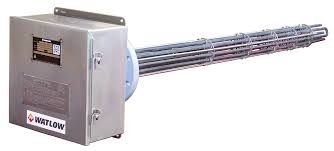
A series of explosion-proof industrial heaters capable of up to three megawatts total power and watt densities of up to 100 W/in2. Comes with UL® and CSA component recognition and IEC and ATEX recognition.
These heaters come with optional sheet metal enclosures to reduce weight and feature a standard lead wire construction that simplifies wiring to a power source.
#2 Chromalox AEPS Hazardous Location Enclosure Heaters
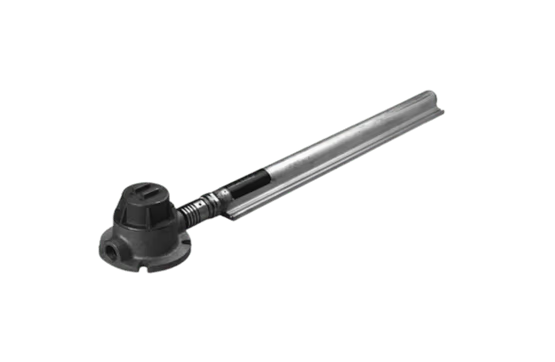
A line of explosion-proof strip heaters intended for enclosures used in Division 1, Class 1 and 2 environments. The heating elements are inserted into solid aluminum bodies and are available in a range of lengths. They are UL-certified and carry a T3 temperature rating.
#3 Tempco Silicone Rubber Drum Heater
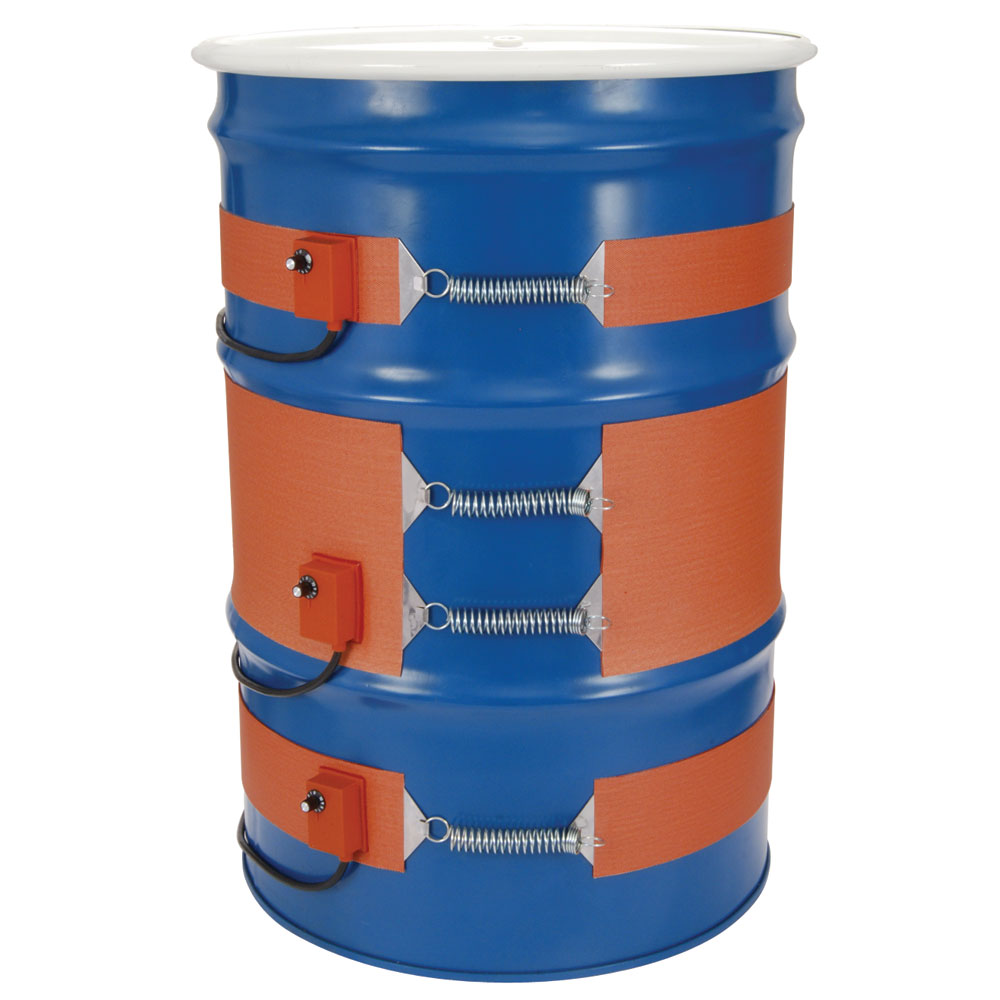
These flexible heaters are designed to clamp around the outside of tanks, drums, and barrels. Heaters are UL-recognized and available with T3 and T4 temperature ratings. Its power density is 2.5W/in2 and its maximum operating temperature is 425°F/218°C.
#4 BriskHeat Class 1, Division 1 Gas Cylinder Warmer
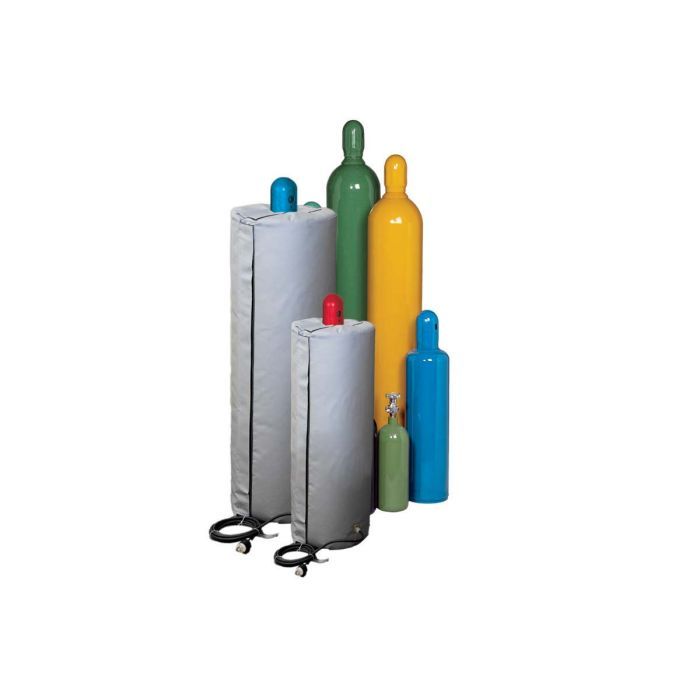
BriskHeat’s gas warmers wrap around cylinders, keeping the metal and its contents warm. This thermal solution protects against condensation and increases pressure, reducing gas waste.
BriskHeat’s warmers are intended for Class 1, Division 1 environments. Available sizes are 3-15” diameter and 15-51” tall.
#5 Mokon Xtreme-Therm® System
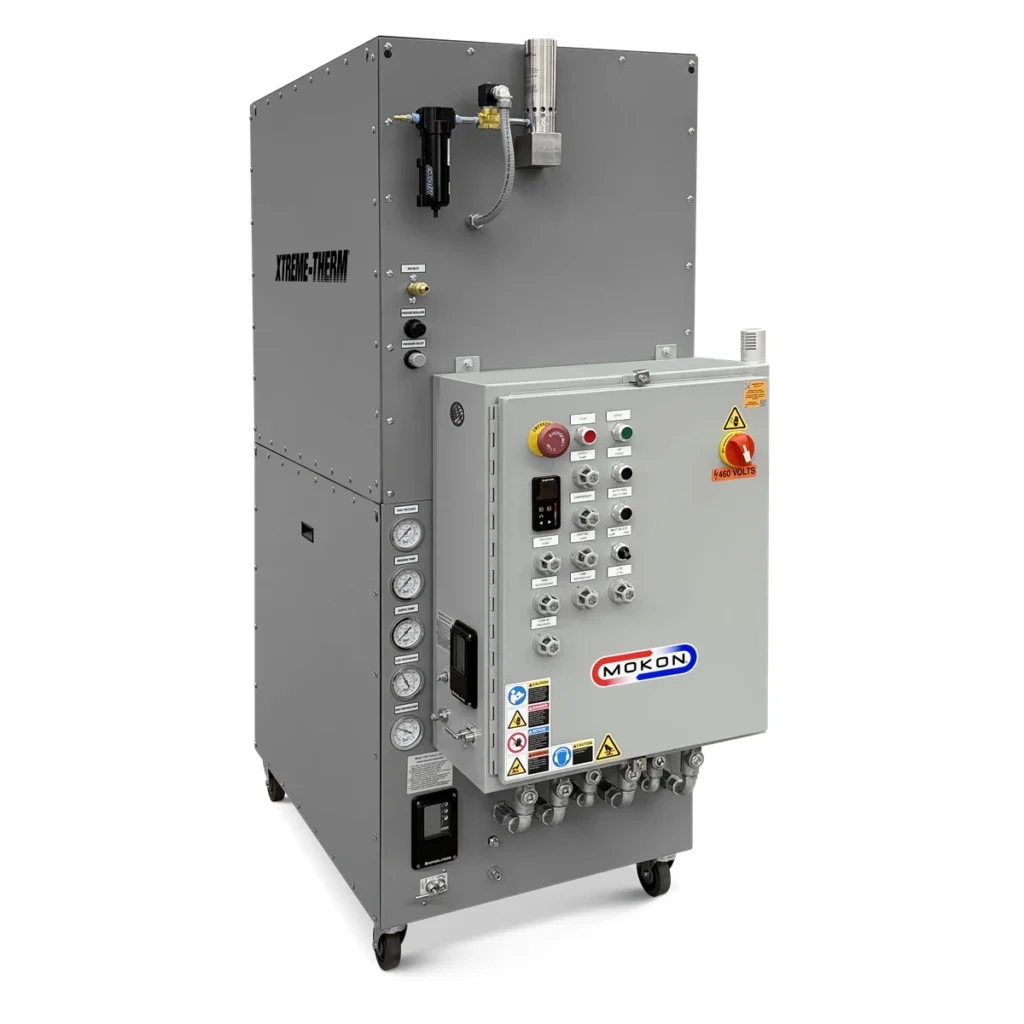
Mokon manufactures circulating liquid temperature control systems. Their Xtreme-Therm line, available in either water- or oil-based systems, is designed for heating (and cooling, if needed) in challenging industrial applications. Mokon offers system configurations suited for Class 1, Division 1 and 2 environments.
Its standard features include polyester powder-coated heavy-gauge steel cabinets and Incoloy® sheathed heaters. However, extensive customization is available.
Find Your Solution Today
Hi-Watt is a leading regional distributor of heating solutions. Whether you’re looking for explosion-proof industrial heaters or temperature sensors and controls, we guarantee we have what you need. And if we don’t have an off-the-shelf solution, we’re happy to customize one for you. As a turnkey thermal solutions supplier, we also provide integration and installation assistance, expert technical support, on-site repairs, and ISO 17025-compliant calibrations for process controllers.
If you’re not sure which product is best for your plant, contact us today to speak with one of our application specialists.