
Understanding Heat Transfer in Process Heating
Many processes across the aerospace, automotive, medical, agriculture, plastics processing, electronics manufacturing, and other industrial sectors need reliable heating to ensure product quality.
One factor that not only influences product quality but also heating efficiency and energy costs, throughput, and equipment life is heat transfer (how well the heat moves from the heater into the product).
In process heating applications, heat transfer often gets less attention than the heater itself. But poor heat transfer can show up as longer warm-up times, higher temperatures, inconsistent product quality, and premature heater failure.
What Influences Heat Transfer
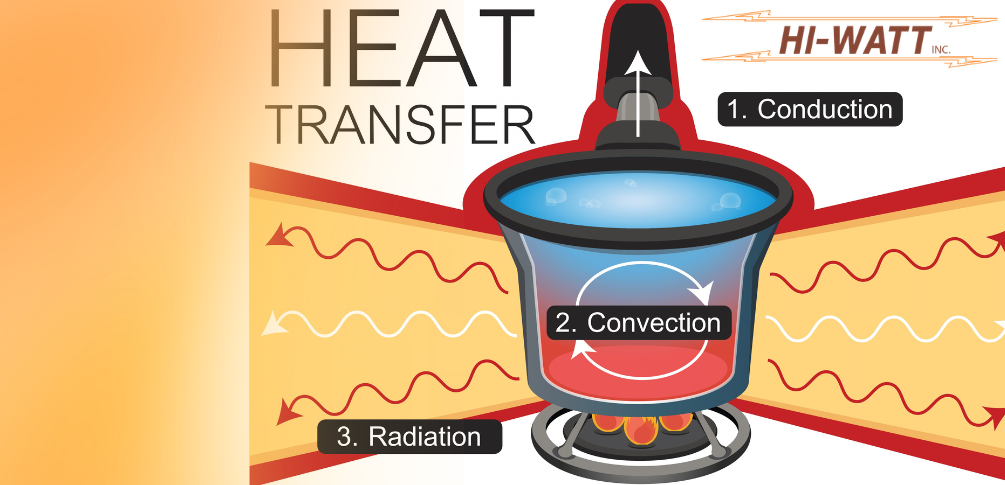
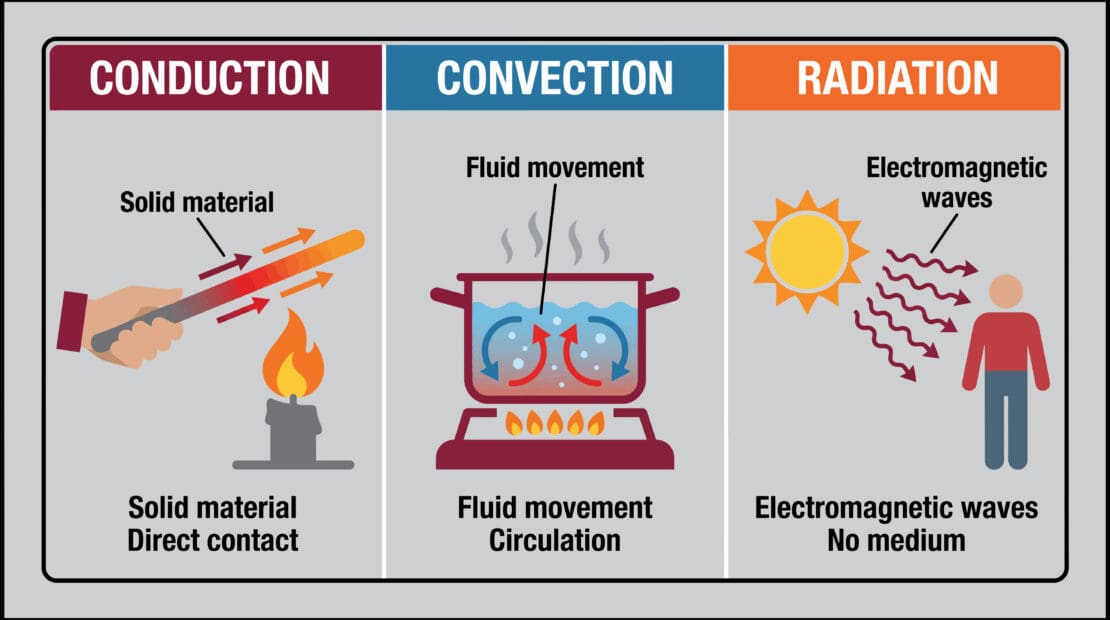
Heat moves by conduction (solids or direct contact), convection (air, steam, oil, etc.), and radiation (electromagnetic energy).
In most process heating applications, heat transfer rates come down to three elements: the effective area available to transfer heat, how much resistance exists between the heater and the load, and the temperature difference. This last element is important because manufacturers are often tempted to run the heaters hotter, but excess temperature can create hot spots and shorten the heater lifespan.
Each factor we discuss below influences one or more of these elements.
Surface Contact
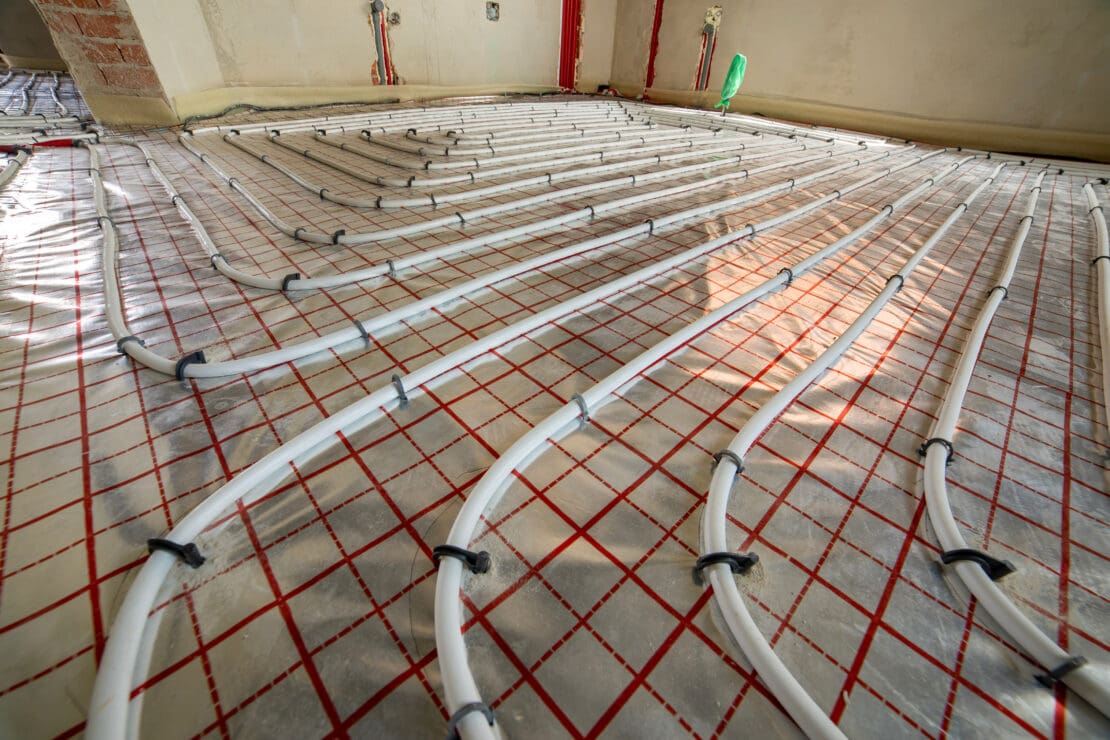
In direct contact heating, good solid-to-solid contact is critical. Any gap between a heater and a workpiece acts as insulation (air is a poor conductor of heat) and lowers the heat transfer coefficient and the surface area where heat can enter.
Good surface contact requires flat, clean mating surfaces, good clamping pressure, and heater configurations that keep the product pressed against the heated surface.
Contact Resistance
Even if surfaces appear to be in full contact, they still only touch at microscopic high points. The tiny voids between them, whether filled with air or nothing at all, create resistance that causes a temperature drop (called thermal contact resistance). When the materials being heated conduct well, thermal contact resistance can dominate total resistance. This resistance can be reduced through higher contact pressure, smoother surface finishes, or using softer materials that deform to fill gaps.
Additionally, if heat transfer surfaces foul or corrode, it adds unnecessary resistance that lowers the heat transfer coefficient and causes the heater’s internal temperature to increase, resulting in premature failure.
Surface Area & Geometry
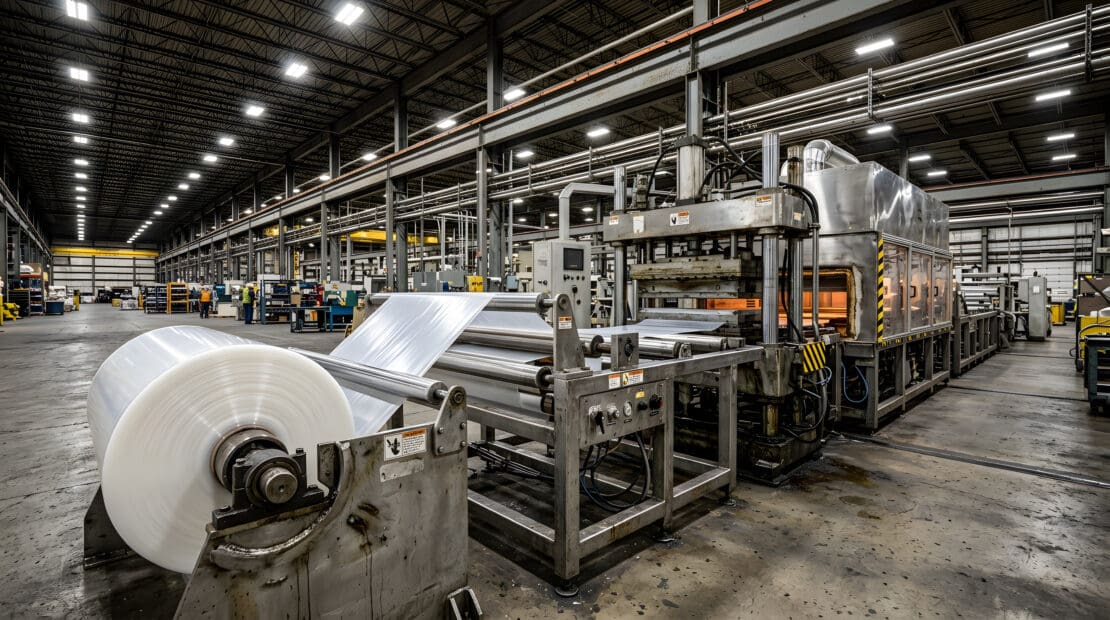
If more surface area is exposed to heat, the flow of heat increases, which is why fins and larger contact areas help improve heat transfer. For example, breaking a material into smaller pieces (granules, thin sheets, etc.) increases the surface-to-volume ratio and speeds heating dramatically.
Likewise, geometry influences internal heating. For conduction heating, the time to heat through a part scales (roughly) with the square of its thickness, meaning that as parts get thicker, it takes increasingly longer for heat to reach the interior, so geometry can have a major effect on warm-up time and uniformity.
Material Characteristics
Materials accept and spread heat at different rates. Each material’s properties and characteristics, including surface finish, thermal conductivity, density, specific heat (the energy required to increase a material’s temperature), emissivity, moisture and phase changes, and temperature dependence, influence how quickly heat is accepted and spread.
As an example, in radiant heating, dark, rough, and oxidized surfaces absorb heat better than polished materials, which reflect the incoming radiation.
Type of Heating Technology Used
The technology used to heat surfaces influences transfer mode, where in the material the heat is generated, and how large the effective coefficient can be.
- Fuel-fired and high-temperature radiant furnaces are effective at high-temperature heating because radiant heat transfer increases sharply as temperature rises.
- Hot air and convection heating is gentle, with low coefficients that can be raised through high-velocity or impingement airflow.
- Infrared heating works particularly well for coatings and thin materials.
- Conduction heating works well with materials with high thermal conductivity, like copper and aluminum.
How Do You Know You Have Bad Heat Transfer?
- Warm-up times are longer than usual
- Process heaters are failing much faster than their predicted lifespans
- You’ve noticed product quality issues that are difficult to diagnose
- Energy costs are rising, even with the same output
- Heaters look discolored or overheated
Tips for Improving Heat Transfer
- Material Compatibility: What materials do you currently process or plan to process? Use a heating technology that matches the material you’re heating, or integrate multiple heating technologies into your thermal system if you frequently process different material types. Also consider material when sizing a heater (determining watt density); too much heat concentrated on a material that can’t absorb it quickly could scorch or coke.
- Consider Maintenance: Fouling and scale introduce resistance that can impact heat transfer rates. Ensure your process heater(s) are easy to maintain, and that oxide and debris are regularly removed from heaters and other heat transfer surfaces.
- Look at Mounting: Clamps and fasteners can loosen over time, especially in high-vibration environments. During maintenance checks, verify that there’s enough pressure to keep surfaces mated.
- Remove Air Gaps: An electric heater produces heat at a fixed rate, and if that heat can’t flow into the product due to air gaps, scale, or loosened fasteners or clamps, the heater itself gets hotter. Additionally, if you use band heaters, cartridge heaters, or heat tracing, ensure they’re sized correctly so they fit around or on the surface they’re heating.
- Use Thermal Interface Materials: If parts are bolted or clamped together, use pastes, pads, graphite foils, and other thermal interface materials to improve contact.
- Increase the Effective Surface Area: If heating via furnaces or ovens, space parts so that every surface is exposed.
- Use Staged or Profiled Heating: Staged heating can offer rapid heating early in the process, then gentler heating as the product approaches its setpoint.
Schedule a Thermal System Assessment With Hi-Watt
In many situations, our customers blame the process heater for heating inefficiencies, but process heaters are just one component of an entire thermal system. Sensors and controllers matter, too. Adding wattage or turning up the temperature won’t solve your thermal problem if it’s caused by an air gap, fouled components, bad sensor location, or an inadequately tuned controller.
If you’ve noticed problems with your thermal process, Hi-Watt is here to help. As a turnkey heating solutions provider, we offer product selection assistance, field calibrations, controller tuning, installation and integration guidance, and remote thermal system assessments.
Our comprehensive assessments account for every component within your thermal system, not just the process heater. In past assessments, we’ve determined that a simple cost-effective fix, like tightening a clamp or reinstalling a sensor improved process efficiency more than investing in new equipment. Likewise, we’ve also found that incorrectly sized heaters were the source of process inefficiency problems.
If you have an issue that you haven’t been able to diagnose, contact Hi-Watt today to schedule a thermal system assessment.