

How Custom Control Panels Improve Rapid Testing in Chemical R&D
In chemical R&D, rapid testing helps reduce product time-to-market by allowing labs to perform more testing and gather better quality data.
Rapid testing often requires investment in automation and advanced equipment that accelerates processing and carries out faster measurement, but an often-overlooked element is the custom control panels that operate the equipment used for testing. They monitor process parameters, turn heaters, pumps, and valves on and off as needed, and ensure everything is maintained within the required limits.
The complex and often time-sensitive processes used to explore and test new formulations and products require sophisticated, process-specific control systems. This article explores the benefits of using custom control panels (rather than off-the-shelf control solutions) for rapid testing and design considerations for the chemical industry.
Centralized Process Control
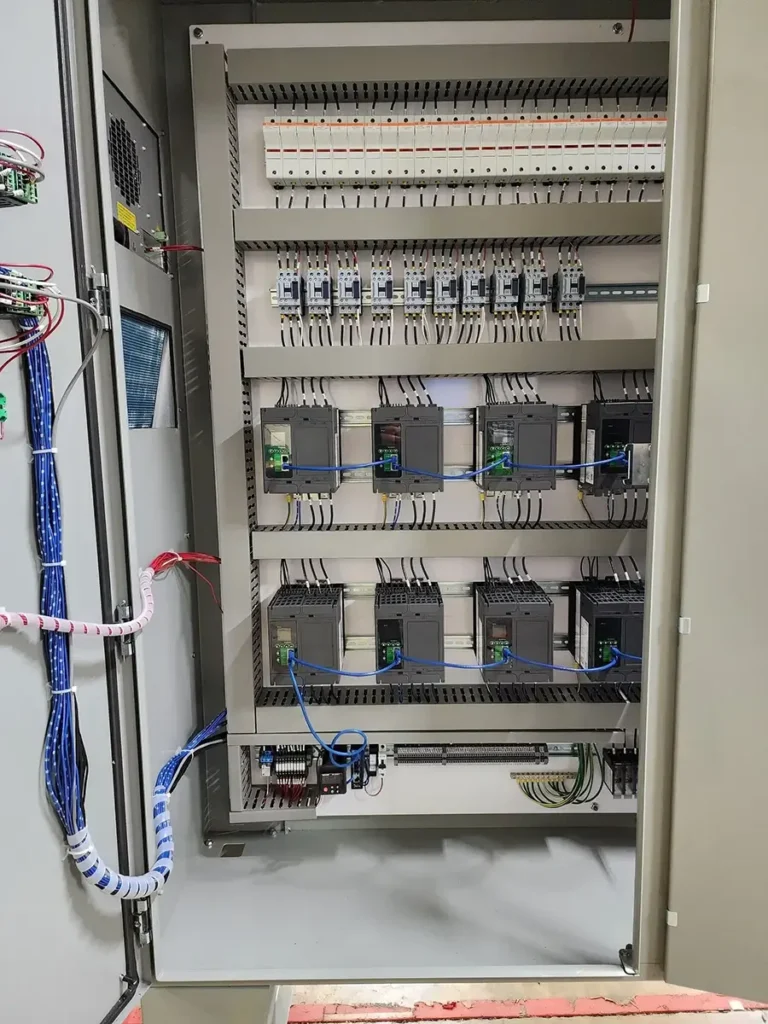
A custom control panel can operate and gather data from multiple pieces of equipment to provide:
- Real-time monitoring for rapid identification and mitigation of process errors.
- Better data integrity because it doesn’t rely on manual data entry.
- Accessible test data from one central location.
- Better process consistency because standardized protocols can be deployed from a single location.
- Centralized data storage to simplify compliance with quality systems and other regulations.
- Remote access and oversight to support after-hours testing.
- Scalability, since new equipment can be integrated into the existing control system.
Automatic Predefined Test Protocols
A custom control panel can be configured to run test routines and procedures automatically. These can cover both automated testing itself and verification of the correct operation of test system components.
For testing, this automation avoids the risk of variability being introduced by operators setting or using different test parameters and ensures test conditions remain consistent across multiple rounds of testing.
For test system operation, running predefined test protocols verifies that components, from heaters to pumps, are operating correctly. If any deviations are detected, the data will be used to initiate maintenance or modify how the test system operates.
An additional benefit is that using predefined test protocols helps improve safety. By establishing limits ahead of time, unsafe operating or testing conditions are avoided, which prevents overheating, fires, and other hazards.
Real-Time Data Integration
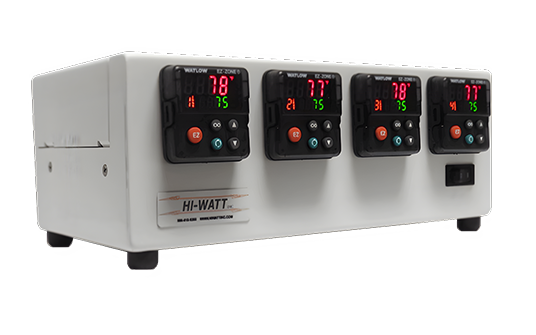
Rapid testing is intended to generate large quantities of high-quality data. Custom control panels provide an immediate view of data quality, allowing researchers to determine whether there are any faults in the test protocol and whether the protocol should be stopped, corrected, or restarted. Compared with a more serial approach, where faults are only discovered after test completion, this saves time and significantly reduces research costs.
Alarm-Driven Response
A complex testing system typically manages a large number of parameters. For example, temperatures often need to be maintained within tight limits or to follow strict profiles, pumps need to deliver specific flow rates and pressures, and valves need to open and close at precise times.
Custom control panels can be configured to provide highly tailored notifications or alerts for any faults or problems with any equipment components or sub-systems. Indications and messages can range from analog warning lights and dials to text-based or on-screen notifications that provide extensive information about the identified faults.
Additionally, these alerts can all be time-stamped and logged to support later diagnostic efforts. It’s also possible to provide alerts over internal networks or even to cell phones.
Design Considerations for the Chemical Industry

Control panels for use with R&D in the chemical industry require more flexibility than those used in production systems, and must be designed for the testing environment.
Increased flexibility allows the system to be modified to handle additional test equipment and an expanded range of protocols. Greater flexibility is achieved by providing spare I/O capacity, using modular PLCs and I/O, and allowing ample space in cabinets and cable ducting for expansion.
Other design considerations include:
Chemical-Resistant and/or Hazardous Location-Rated Enclosures
Panels may be located within or adjacent to hazardous areas, exposed to corrosive vapors, fumes, or dust, and may require washdown procedures.
For this reason, custom panels may need to be chemically resistant to prevent corrosion and damage to electrical components, and/or rated for use in hazardous locations.
IP/NEMA Rating
Panels may need protection from washdown, dust, corrosive vapors, or nearby hazardous areas. The correct IP or NEMA rating depends on the environment, maintenance practices, and applicable safety requirements.
Ingress protection (IP) ratings are defined by IEC 60529. Often seen as IP 65 or IP 67, these classifications specify levels of protection against solid objects (the first digit) and liquids (the second digit). IP 67, frequently specified for test panels, provides high protection against both.
NEMA ratings, widely used in the U.S., serve a similar function by specifying protection against ingress. However, they take a more application-specific approach and can include requirements for gaskets, durability, and corrosion resistance. Chemical R&D control panels often need to comply with NEMA 4 or 4X.
Appropriate Color Coding
Color coding improves safety and supports maintenance, diagnostics, and potential future expansion. Many standards, such as UL 508A (the Standard for Industrial Control Panels), either require or recommend color coding. For example, neutral conductors are usually labeled white, while AC control circuits are red, but color coding requirements can vary.
Integration With Existing Protocols
When specifying custom control panels, consider whether they should use existing protocols or integrate with them. If test equipment is being upgraded or expanded, is the new control equipment expected to work with what is already in place, or will it replace what is already there?
Some level of integration will be needed in both scenarios, but the details will vary significantly. As an illustration, older data collection systems may require ongoing support for communication interfaces such as RS-485, while an entirely new system might use Modbus or Profinet.
Hardwired E-Stops
Often used in UL 508A control panels, hardwired E-stops can provide a direct safety response independent of PLC logic when the application requires it.
When specifying or designing custom control panels, consider each piece of equipment in the system and determine whether cutting power is an appropriate response to problems. While it may be necessary to stop motion and prevent overheating, there may be reasons to keep some items, such as extraction systems and agitators, running.
Custom Over Standard

There are many reasons why custom control panels work better than standard units for rapid testing. Primarily, it’s because the panels are engineered to meet specific requirements for equipment and testing processes.
Specifying a custom control panel allows:
- Remote access to test equipment, as required by the type of testing being done.
- Permission gating to meet organizational and regulatory requirements.
- Data compliance with the standards used or expected in the chemical industry.
- Alarm prioritization to minimize disruption while still providing high levels of safety.
- Recipe management systems to meet specific needs.
- PID tuning tailored to the equipment in use.
- Predictive setpoint adjustment to support recipes and processing requirements.
Get Help Designing Your Control Panels
Custom control panels ensure precision, repeatability, and speed in R&D operations, but their design and construction take specialist expertise.
As a turnkey thermal solutions provider, Hi-Watt helps manufacturing and research departments improve process efficiency and reduce downtime through custom control panel designs and tailored heating, sensing, and control solutions. Recently, Hi-Watt helped a biopharma manufacturer design a custom system that controlled temperature, humidity, airflow, and motion in multiple environmental chambers from one convenient location. We didn’t just design a panel that turned equipment on and off. We helped the lab run repeatable test protocols with better visibility and fewer manual steps.
Visit our website to learn more about our design capabilities, or contact us today to discuss your project with a Hi-Watt application specialist.